Today, medical furniture has become more than just a piece of equipment or furnishing, but rather it has become a fundamental component of patient care, which can influence clinical results, infection control and efficiency. The structural steel frame used to be the basis of the medical facilities furniture. However, the advanced engineering polymer is rapidly becoming the key element of innovation in contemporary medical furniture design.
The shift to medical-grade plastics from traditional plastics is extremely challenging for Original Equipment Manufacturers (OEMs). The choice and processing of these polymers demand the knowledge of chemical resistances, mechanical stresses and regulatory compliance.
As a dedicated subdivision of Mitsu Chem Plast, Furnastra specialises in bridging this gap. Furnastra’s high-performance, medical-grade plastic parts allow healthcare OEMs to manufacture furniture that can meet the rigorous demands of today’s clinical environments.
Why Plastics Dominate Hospital Furniture?
The reason that hospital furniture manufacturers have relied on plastics for quite some time now is that it offers an unparalleled combination of properties that no other material can deliver. Being highly durable, hygienic and easy to manufacture with modern moulding techniques, plastics allow OEMs to produce ergonomic and high-quality healthcare furniture easily. These are the reasons why medical-grade plastics are important in hospital furniture:
- Natural Anti-Bacterial and Anti-Fungal Properties: The non-porous nature of medical plastics makes them resistant to bacterial and fungal invasion. As a result, health facilities are able to achieve their stringent cleaning and sanitization requirements.
- Lightweight Nature of Plastic: The inclusion of plastics in hospital furniture makes them lightweight. Therefore, furniture becomes easy to transport in case the need arises.
- Resistance to Disinfectants: Medical-grade plastics are resistant to many of the disinfectants used in hospitals, including QACs, isopropyl alcohol, and sodium hypochlorite. They also do not chip or fade with exposure to these chemicals repeatedly.
- Versatile Design: Modern injection and blow moulding technologies enable the manufacture of plastics in complex shapes. Therefore, medical plastics are easily moldable and can form aesthetically pleasing furniture that is comfortable.
- Durability: Medical plastics are moisture and impact-resistant, making them durable under any conditions. Also, they can serve the medical field well in terms of durability and reduced maintenance costs.
- Cost effective : Hospital furniture from ABS plastics is a cost effective option compared to metal spare parts. This balances initial investment with long-term operational benefits for the healthcare facilities. Also, their durability and hygienic properties reduce ongoing maintenance expenses for healthcare facilities.
- Greater infection control: ABS panels are non-porous. Thus these furniture parts inhibit bacterial and virus growth. Also, these can be wiped-down for quick cleaning, thus reducing the risk of cross-contamination and hospital-acquired infections (HAIs). Hence, healthcare facilities face minimum liability and expensive patient care setbacks.
The 5 Essential Plastic Components OEMs Must Perfect
In order to produce high-quality hospital furniture, OEMs should focus on those plastic parts that come in most contact with the patients or suffer maximum mechanical stress. There are a total of 10 essential components that must be mastered for creating reliable hospital furniture.
1. Over Bed Table Top
The table top is one of the most commonly used pieces of furniture in hospitals. This allows for different things to be done by the patients i.e. eating or taking their medications, and so on. The manufacturers have to ensure that the surfaces of these tables are manufactured from medical grade plastic so they are both hygienic and durable. These surfaces need to be resistant to stains, non-corrosive, resistant to moisture and easy to wash after repeated sterilisations. The surface should also have smooth, rounded edges.
2. Bed Liner
Bed liners are extremely important in hospital furniture since they help improve hygiene while also preventing damage to the furniture. OEMs must select high-quality, durable plastic materials that can withstand the weight of the patients, as well as repeated exposure to disinfecting agents. Bed liners must also feature a seamless structure to eliminate dirt-trapping zones. Using quality bed liners helps in improving the life of the furniture and ensuring better infection control in hospitals.
3. Bed Board Plank
These planks are used in hospital furniture as they offer a uniform and consistent support to mattresses and patients. For the best performance, OEMs should choose high-impact polymers for manufacturing these planks. In addition to having uniform wall thicknesses, bed board planks should also possess reinforced ribs to improve their strength and load-carrying capabilities. Besides, the material selected for manufacturing these parts must also exhibit high resistance to moisture and frequent cleaning with disinfecting chemicals. Such bed planks help in enhancing the overall comfort of the patients.
4. Headbows & Footbows
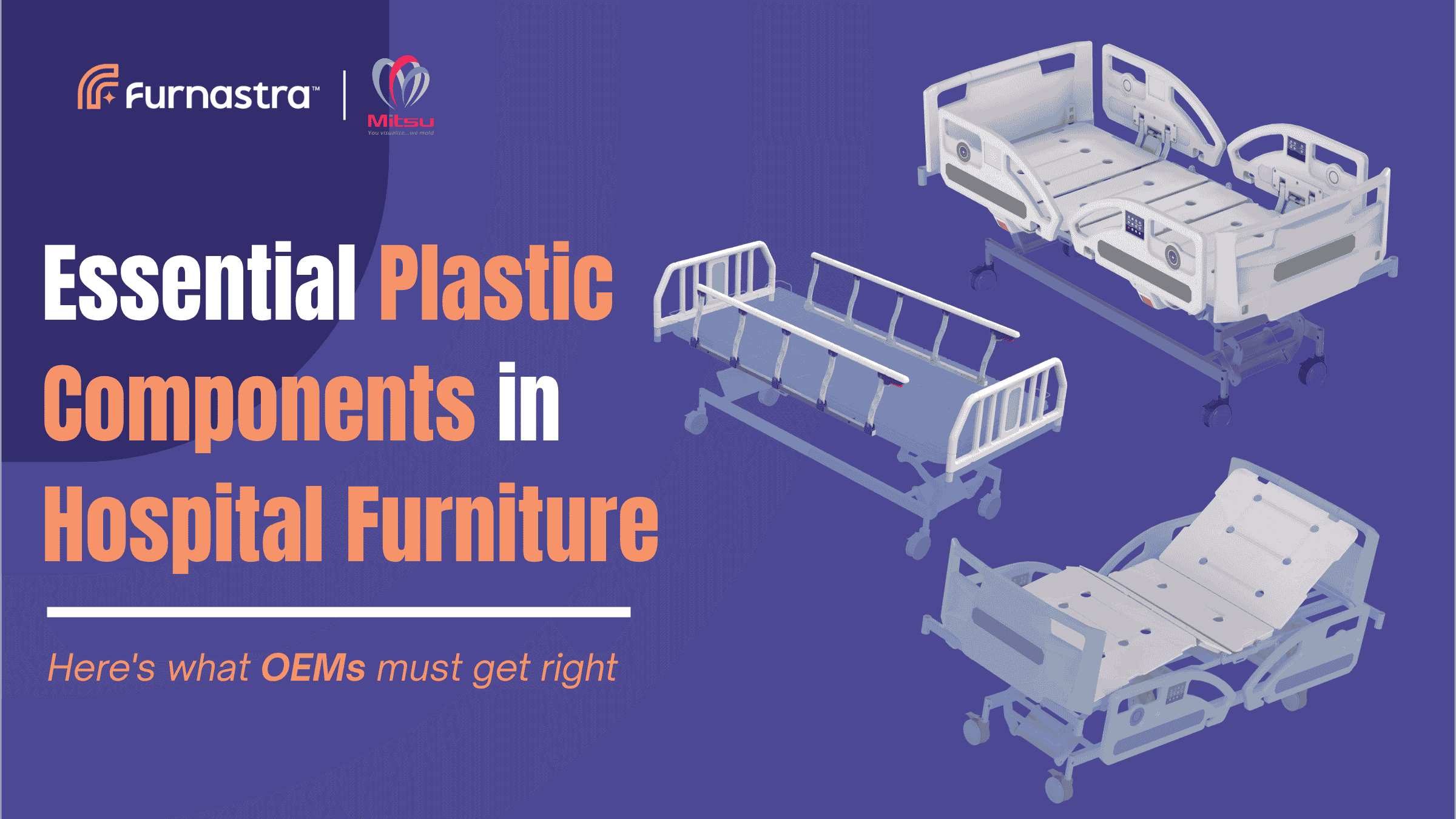
In most cases, the headbows and footbows are used as structural components of hospital beds. Their main function is to increase the functionality and aesthetic value of the bed. In order to manufacture these structural parts, OEM companies should use strong materials that will withstand frequent movements and contact with various things. These parts should be designed to be attached firmly and accurately to the frame of the bed.
5. Side railing
Side railings are an essential component of modern hospital beds, designed to enhance patient safety, support mobility, and provide additional comfort during medical care and recovery. Widely used in hospitals, clinics, and healthcare facilities, these railings help prevent accidental falls while ensuring easy accessibility for both patients and caregivers. Modern plastic side railings are preferred for their lightweight structure, durability, hygienic surface, and ease of maintenance, making them ideal for demanding healthcare environments. To explore the importance, and benefits of hospital bed side railings, read our complete blog on – Importance of Strong Side Railings in Patient Safety.
Design and Manufacturing Requirements for Medical Furniture OEMs
Medical device manufacturing imposes extremely high requirements on component design and manufacturing technology. OEMs should never think about these plastic elements as just another household item. They should pay attention to:
- Wall Thickness/Structural Ribbing
One of the common engineering problems often seen in inferior designs is structural deflection. If a patient presses a plastic side rail of their bed, the structure of the rail should not give way too much. OEMs must use sophisticated FEA techniques to find the optimal wall thickness. Also, it’s very useful to apply internal rib structures to add additional strength during the injection or blow moulding.
- Precision Moulding Required for Integration With Automated Systems
With the increasing popularity of automated medical devices in the healthcare industry, medical plastic components are required to accommodate electrical wires, actuators, and control PCB pads.
- Advanced Manufacturing Processes
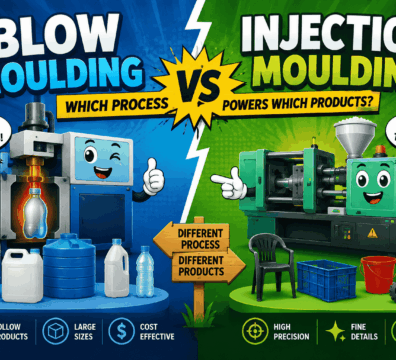
In order to meet such high standards, it is important for OEMs to collaborate with professional medical component manufacturers. Furnastra offers a significant competitive advantage to customers by applying cutting-edge blow moulding and injection moulding technologies for producing medical plastic components. Using these advanced techniques, Furnastra guarantees that all the produced panels, rails, and boards have consistent wall thicknesses, perfect surface finishing, and perfect dimensional tolerance.
Conclusion
Hospitals’ modern furniture is expected to provide not only solidity but also other qualities. Modern health requirements stipulate the use of materials that are safe to use, resistant to contamination, lightweight and easy to transport, and designed for the most effective performance in the conditions of clinical practice. Plastics in the production of hospital furniture have become necessary because of the unique features and possibilities that they offer.
For OEM manufacturers, selecting proper materials and establishing cooperation with specialised manufacturing enterprises is critical for the creation of high-quality furniture that is capable of providing reliable service in challenging hospital conditions. With its expertise in manufacturing medical-grade hospital furniture parts, Furnastra enables OEMs to create innovative, reliable and future-proof hospital furniture parts that deliver long-term value to health care providers and patients.
FAQs
1. Are plastic components durable enough for hospital use?
Yes, modern medical-grade plastic components are designed to withstand continuous usage, regular cleaning, and demanding healthcare conditions while maintaining long-term performance and reliability.
2. How do plastic components improve patient safety?
Well-designed plastic components feature smooth edges, ergonomic structures, and secure fittings that help reduce injuries, improve patient support, and enhance caregiver convenience.
3. How do ABS components offer weight advantages over metals?
ABS plastics reduce weight handling, eases transportation & mobility and are convenient to assemble while lowering shipping costs. Yet, these can meet strength and durability requirements at the healthcare facilities making them an ideal replacement of metal components that are corrosive and bulky in nature.
4. Why is choosing the right manufacturer important for OEMs?
A reliable manufacturer ensures consistent quality, precision manufacturing, timely delivery, product innovation, and compliance with healthcare industry standards, which directly impacts the performance of hospital furniture.