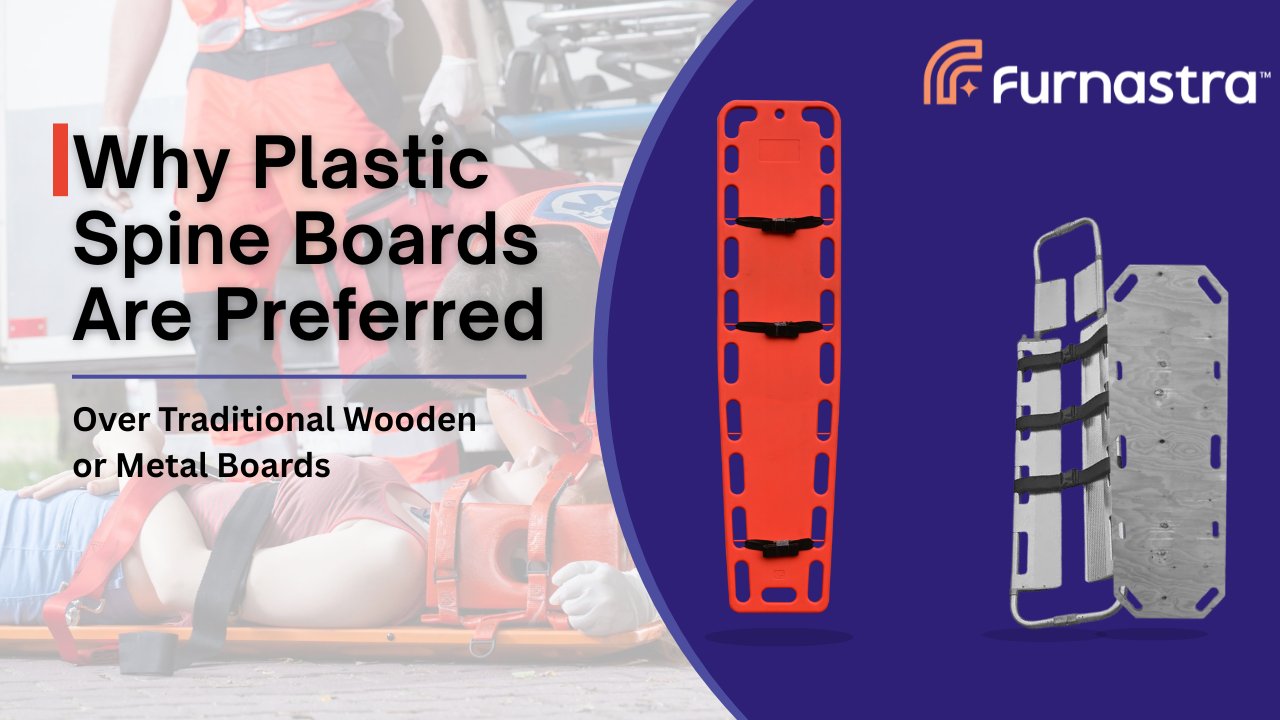
When it comes to emergency medical care, such as patient transport, the decision about the equipment may significantly affect safety and efficiency. The plastic spine board is one such essential device that has become the number one option among hospitals, clinics, emergency services, and ambulances.
Compared with traditional wooden or metal boards, plastic alternatives offer a range of useful advantages aligned with current healthcare requirements, including high hygiene standards and increased portability. At Furnastra, we understand how vital these improvements are, and we are proud to offer high-quality plastic spine boards as part of our dedicated hospital furniture parts portfolio.
What Is a Plastic Spine Board?
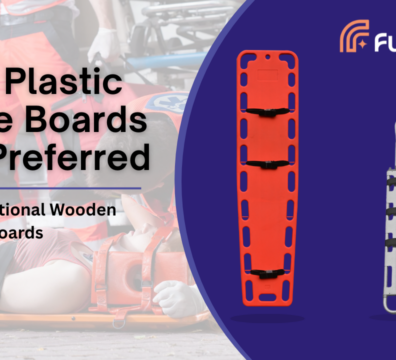
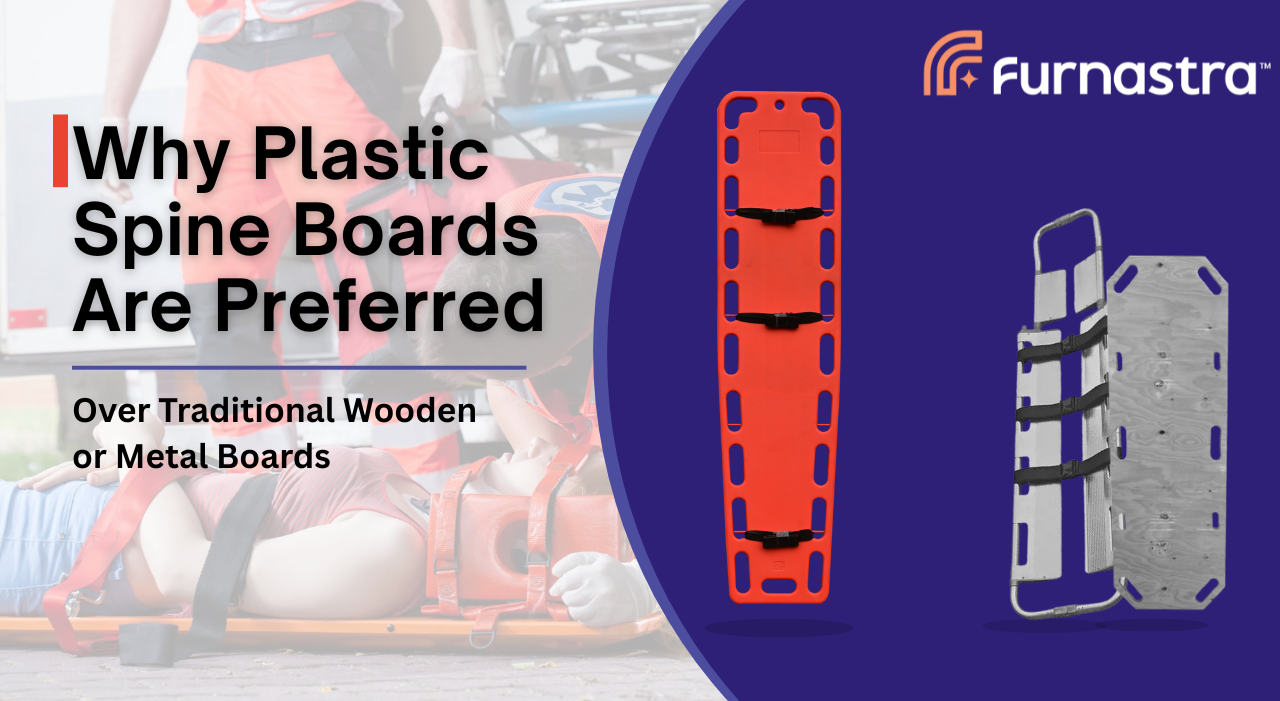
A plastic spine board is a rigid plastic board used to stabilize patients with suspected spinal injuries during rescue, transportation, or emergency care. It is made from high-density polymers, such as polyethylene or ABS. It is designed to be lightweight yet strong enough to support adult patients and maintain structural integrity under stress. Moreover, this allows medical teams to immobilize the spine instantly at the scene and during transfer without having to move patients around repeatedly.
Advantages of Plastic Spine Boards Over Wooden or Metal Boards
The most significant benefits of using plastic boards as compared to wood or metal spine boards are:
1. Lightweight and Easy to Transport
Among the more noticeable advantages of this board is its lower weight compared to the wooden/ metal spine board. Plastic spine boards usually weigh less, so it is easier for rescue crews or medical personnel to carry the patient to the hospital. This is especially useful when conducting rescue operations, especially in outdoor settings.
2. Waterproof and Weather-Resistant
The plastic used in the spine board is also moisture-resistant, making it more useful during rescue operations in the rain or in water. It also makes the board more useful in high-humidity environments.
3. Hygienic and Easy to Clean
The necessity of cleanliness cannot be stressed in the medical sphere. The Plastic Spine Board is easy to clean because the plastic does not absorb liquids. This makes the board more useful than the wooden version, which is likely to compromise quality due to its difficulty in cleaning. Metal boards may also corrode or rust over time if not properly maintained, which can affect hygiene standards.
4. X-Ray and Medical Imaging Compatibility
These boards are also useful because they are compatible with medical imaging. Most modern plastic spine boards are radiolucent, meaning they allow X-rays to pass through the body. This makes the board more useful because it enables medical staff to perform medical imaging without removing the patient from the board. Metal boards, on the other hand, are not X-ray compatible and can interfere with imaging, potentially requiring additional patient movement.
5. Durability and Structural Integrity
Plastic boards, though lightweight, are designed to support significant weight and withstand harsh conditions. Good-quality plastic maintains its shape and strength even after a few years of use, but the wooden board warps, splinters, or wears off, which does not enhance its functionality.
Conclusion
Patient care equipment has improved over the years, providing better services than in the past. A plastic spine board unit is one of the products that can be classified as a modern solution for patient care. The product has been designed to offer better portability, hygiene, imaging capabilities, and durability than the wooden or metal ones used in the past. Furnastra offerings ensure healthcare professionals can rely on high-quality, certified plastic spine boards that meet the rigorous demands of modern medical environments.