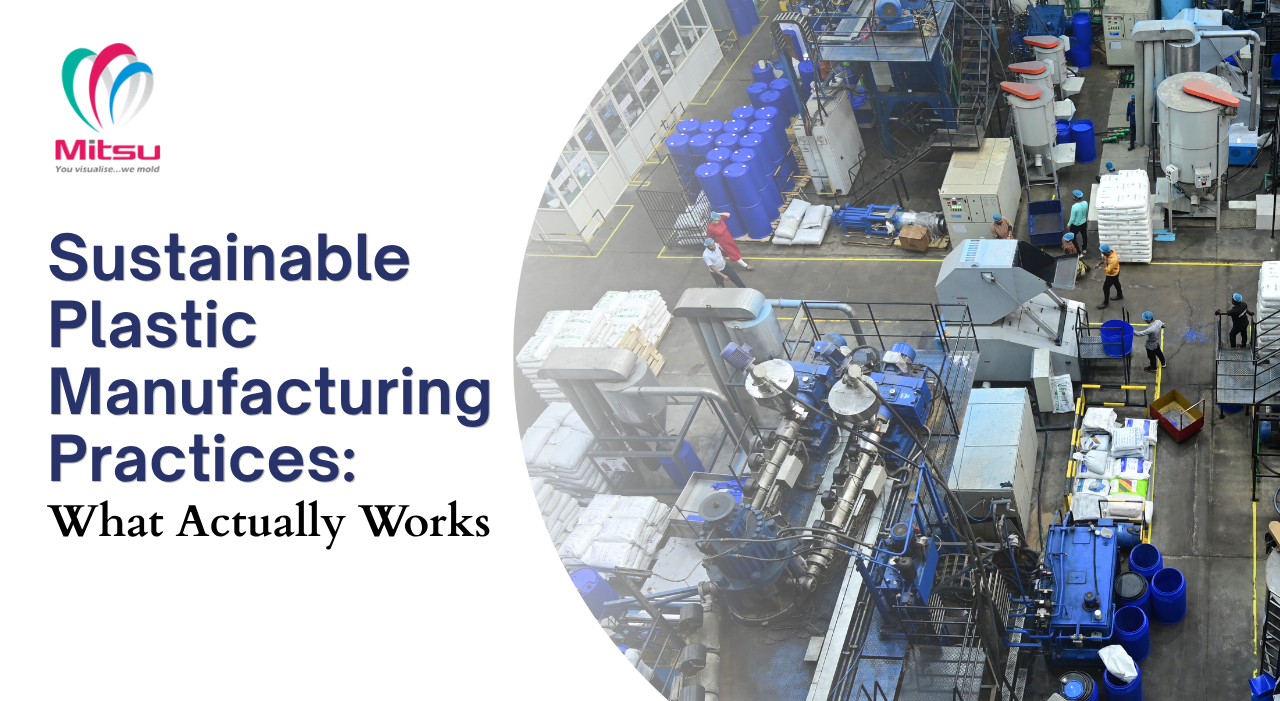
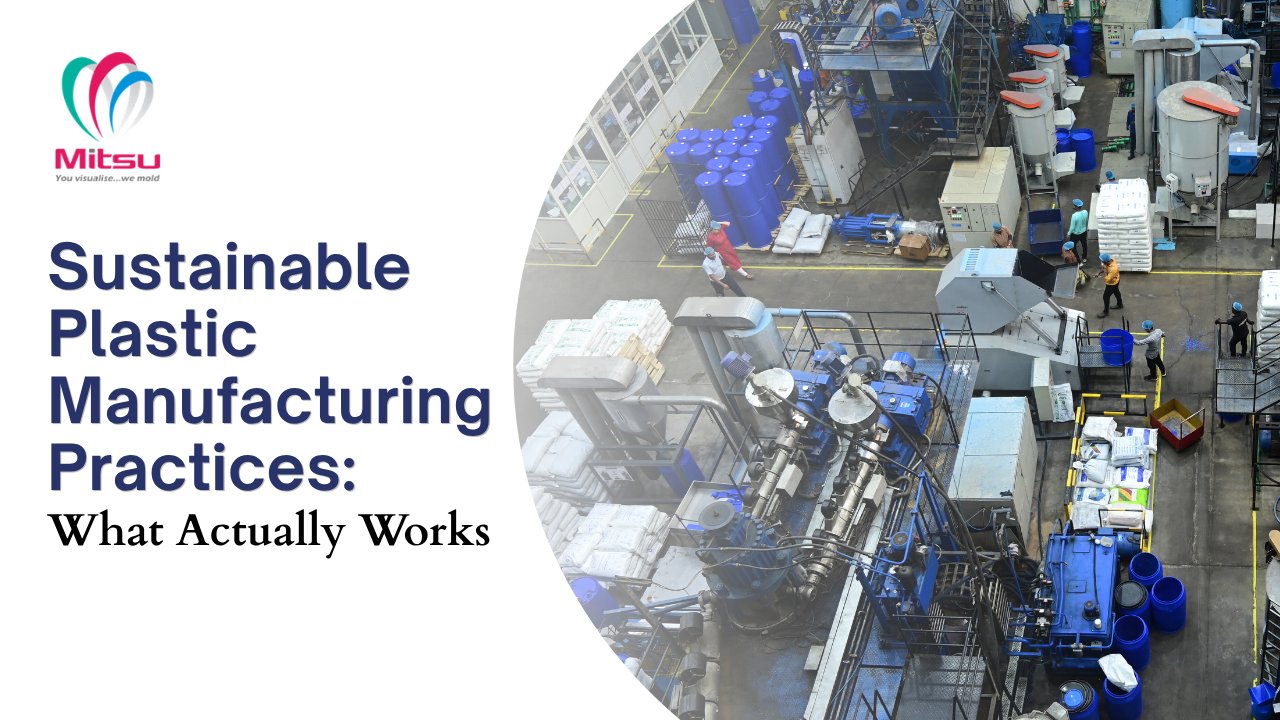
Plastic production is a major engine of the world economy. It is used in food packaging, clothing, and transportation. As per the reports, more than 300 million metric tons of plastic are produced each year. This growth brings serious environmental challenges. It results in increased energy consumption, pollution, and waste. So, sustainable manufacturing is now a necessary process for long-term planetary maintenance.
What Practices Are Being Followed for Sustainable Plastic Manufacturing At Mitsu Chem?
Here, we perform the following steps:
Smart Material Selection
Sustainable materials such as rPP, rHDPE, and approved bio-based polymers are our top priority at Mitsu Chem. Each material has been tested for durability, safety, and environmental effects before use. In addition, where recycled plastics are reducing environmental footprints, virgin plastics are significantly adding to the greenhouse gas emissions.
Energy-Efficient Manufacturing
Our production units use servo-driven injection molding machines, which are highly energy-efficient in their idle state. To keep our overall carbon emissions as low as possible, we also minimize cycle times, implement energy-monitoring systems, and use CNG for logistics.
Waste Minimization Techniques
Using lean manufacturing and process optimization tools, we keep defects and material loss to a minimum. Mould flow analyses help create components that generate as little scrap as possible.
Life Cycle Assessment:
Each product is reviewed from raw material through its end of life. Carbon footprint, energy use, and waste generated are measured. The results are then used to improve further product designs and sustainability.
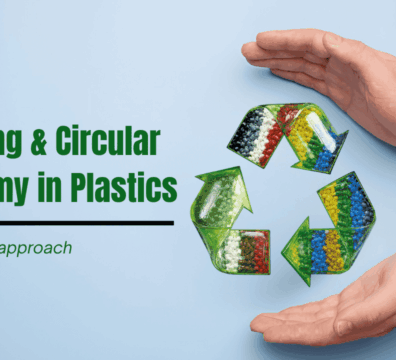
Integration into the Circular Economy:
Each of our components is designed for reusability, maintainability, and recoverability, and can be easily disassembled to enable efficient material recovery. At Mitsu Chem, we strengthen these practices through ISO, EcoVadis, GRI standards, UN SDGs, and SEBI BRSR compliance, making sustainability an integral part of our manufacturing and governance approach.
Challenges in Sustainable Plastic Manufacturing Process
There are many problems.
- The initial investment is challenging due to the high costs of advanced technologies and equipment.
- The strict environmental standards require constant compliance and monitoring.
- Complex supply chains introduce coordination challenges.
- Awareness and willingness to pay for sustainable products are still low.
- Full recycling and material usage are also limited by technology.
- Moreover, consumer awareness is also hindering the rapid adoption of eco-friendly plastic production technologies.
The Sustainability Solutions From Mitsu Chem
At Mitsu Chem, we address sustainability issues through practical, collaborative solutions. We work closely with suppliers, regulators, and industry partners to enhance processes and share best practices. We invest in technology and innovation to develop energy-efficient production and new recycling technologies.
We support public education to create awareness of sustainable plastics. We also promote responsible consumer decision-making through improved product design and communication. Strong policy alignment also supports recycling, waste reduction, and eco-friendly production practices. To encourage recycling, resource conservation, and green manufacturing, we aim to use policy as our reference.
Conclusion
At Mitsu Chem, manufacturing goes hand in hand with sustainability. For us, the future of plastic is about sustainable packaging. We aim to help our B2B partners meet their sustainability targets without compromising quality, performance, innovation, or long-term responsibility across industries.