
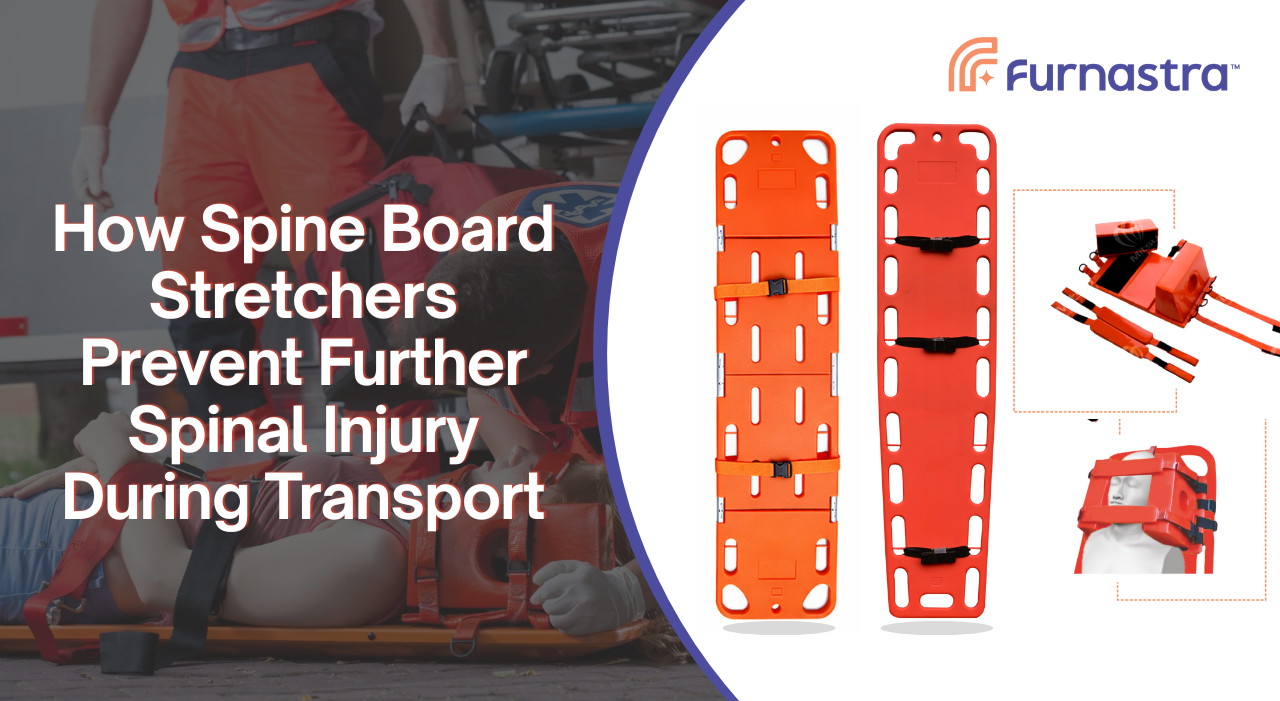
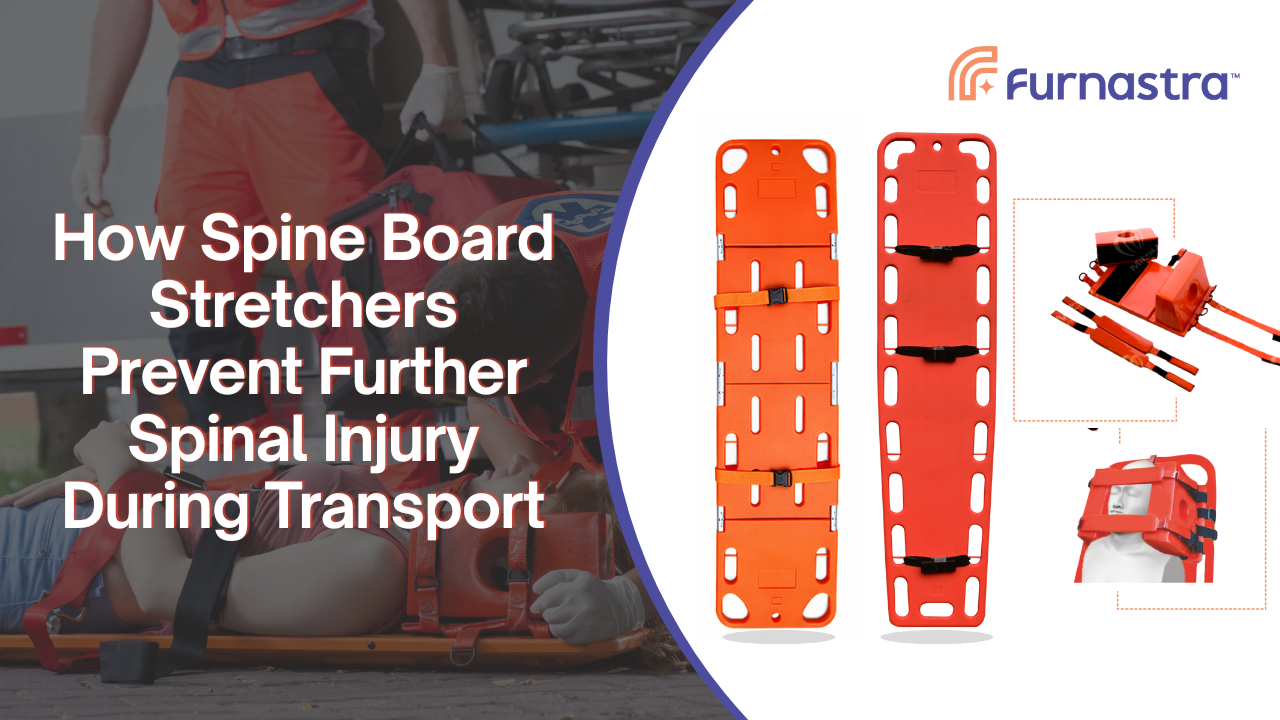
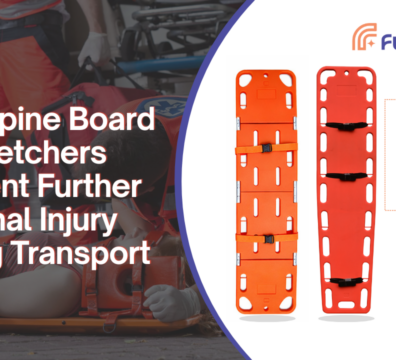
Spinal injury is one of the most critical concerns when a patient is subjected to trauma due to various reasons, such as accidents, falls, or sport-related injuries. This is mainly due to the risk of further injury, even with slight body movement during lifting or patient movement, which could lead to complications in the future. This is where a spine board stretcher proves to be a handy tool in emergencies. Understanding the practical ways this equipment protects patients highlights its importance in emergency and clinical settings.
Ways in Which a Spine Board Stretcher Prevents Further Spinal Injury During Transport
The main reasons why a spine board stretcher will help guard patients and minimise chances of secondary spinal injury during emergency and clinical transportation include:
Ensures a Correct Spinal Positioning
A spine board stretcher features a rigid, flat surface that keeps the head, neck, and back in a neutral position. This construction prevents the spinal cord from bending or twisting during lifting and movement. Since improper alignment may cause pressure in the spinal cord, proper alignment becomes essential.
Limits the Redundant Patient flow
Loss of control in body movement is one of the most significant risks in the rescue and transport process. Multi-point straps and head immobilisers are used on spine board stretchers to maintain the patient’s position. Such restraints decrease lateral and forward movements. Consequently, the spine remains stable and safe even when passing through irregular surfaces or narrow corridors.
Distributes the Body weight evenly
One safety feature of a spine board stretcher is its even weight distribution across the board’s surface. There is an even distribution of weight on the patient, rather than pressure on a single injured part. This reduces the strain on the damaged vertebrae and tissues. Even distribution also enhances comfort and reduces the risk of further compression injury during extended transfers.
Promotes Safe Lifting and Transfers
Emergency teams are equipped to coordinate lifts systematically, and the spine board supports these techniques. Handholds and edge grips allow multiple responders to lift in sync. The spine board stretcher provides a stable base, reducing sudden shifts when moving the patient from the ground to an ambulance or a bed. Controlled lifting directly lowers the risk of spinal aggravation.
Works with Additional Immobilisation Devices
A spine board stretcher is one designed to be used together with cervical collars, head blocks, and fixed straps. This multifaceted method of immobilisation offers overall body stabilisation. Each accessory provides additional control over movement. Combined, these supports provide a transport system that shields the spine as and when the rescue is done until admission to a hospital.
Conclusion
The patient’s spinal protection during transportation is not optional; it is a life-saving practice. The spine board stretcher is in the centre of this, as it provides alignment, limits movement, distributes weight, facilitates safe movement, and provides complete immobilisation. For healthcare infrastructure that relies on dependable, precision-built components, Furnastra delivers trusted, high-quality solutions that support safer medical environments and better patient-handling outcomes. Also, Furnastra is pioneer and the ONLY manufacturer of Spine Board stretchers in India which makes us unmatched and unparalleled.

Comments
A really good blog and me back again.
You are absolutely right. In it something is also thought good, agree with you.