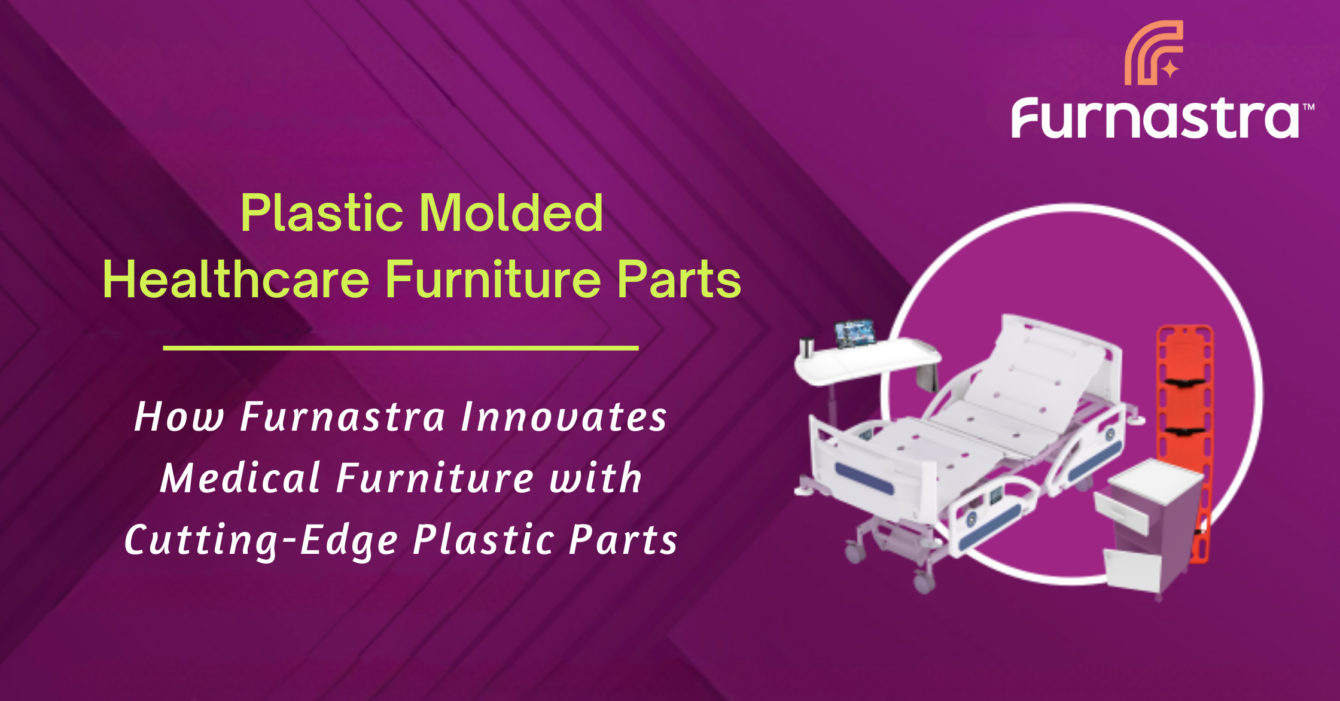

Healthcare settings require accuracy, cleanliness, stability, and regulatory compliance at all levels of infrastructure. Hospital beds, stretchers, carts, and support equipment are subject to constant motion, heavy load-carrying, and repeated exposure to strong disinfectants used to clean surfaces. The quality of medical furniture plastic parts is important in such a strict environment, particularly in terms of performance, safety, and equipment lifespan.
Material innovation is at the heart of the next generation of healthcare furniture components. Performance plastics do not simply offer lightweight properties but also provide good performance under stress, chemical resistance, and long-term reliability in use. This innovation enables the equipment to achieve higher durability and hygiene standards without compromising its quality.
Why Medical Furniture Plastic Parts Are Important in Hospitals
Hospital spaces qualify as sensitive, high-contact environments where furniture surfaces come into contact with patients and caregivers throughout the day. All hospital equipment should operate efficiently with disinfectants, mechanical loads, and frequent human contact.
The non-porous surfaces, impact resistance, and chemical stability of high-grade medical furniture plastic parts help address this need. A hospital environment is a place of precision, hygiene, and reliability, and every piece of medical furniture must perform these functions without fail.
Engineered Approach Used in Medical Furniture Plastic Parts
The high performance of Furnastra products results from the right choice of materials, supported by precise engineering. Furnastra utilises reinforced polymers and special plastic compounds for load-bearing applications and the medical field. The engineering process takes into account the load path, joint stresses, and the behaviour of the products when used repeatedly.
In addition, structural ribs and wall thicknesses enhance the products’ strength without adding unnecessary weight. Also, the use of modular shapes and the integration of locking elements reduces the need for metal inserts, which are often prone to corrosion. As a result, the medical furniture plastic parts exhibit high performance during repeated movement cycles while maintaining their accuracy.
Compliance, Quality Control, and Manufacturing Precision
The elements of healthcare furniture should meet testing and audit standards, and thus, process control becomes a key factor in production. Consistent moulding parameters, validated tooling, and batch-level inspection ensure uniform output. Reliable medical furniture plastic parts depend on dimensional accuracy and repeatable strength characteristics across every production run.
Quality systems support resin traceability, mechanical testing, and validation of chemical resistance. Tight tolerance control ensures proper assembly fit, preventing instability and premature wear in finished furniture systems. This manufacturing discipline strengthens compliance-readiness while reducing field-failure risk.
Conclusion
Contemporary healthcare furniture relies on elements that provide strength, hygiene compatibility, and regulatory compliance simultaneously. Through the use of engineered materials, precise design, and controlled manufacturing, advanced medical furniture plastic parts offer that balance. Furnastra has been advancing this field through performance-driven innovation, enabling safer, longer-lasting, and more compliant medical furniture systems across healthcare facilities. Our across continent shipping of medical grade plastic parts for international healthcare facilities indicates dedication to introducing robust and innovative solutions in challenging medical domain.